
by Jordan Mulford | Jun 12, 2026 | Blog
Most teams don’t run into customer experience issues because they lack technology. By the time things start to feel strained, they’ve already invested in it. There’s a platform in place, some level of automation, and increasingly AI layered into the workflow. On paper, it looks like the right setup, and in many ways it is. Work gets routed more cleanly, reporting improves, and there’s more visibility into what’s happening across the operation.
What tends to catch people off guard is that the pressure on the team doesn’t actually go away. It just changes shape. The simple interactions get handled faster, which is exactly what the tools are supposed to do. But what’s left behind are the situations that don’t fit neatly into a workflow. The edge cases, the exceptions, the conversations where someone has to stop and think before responding. Over time, the work becomes less about volume and more about variability.
Small inconsistencies don’t show up in dashboards. They show up later.
That shift is where problems start to build. Not in obvious, immediate ways, but in small inconsistencies that compound over time. One agent handles a situation one way, another handles it differently. An automated process works most of the time, but when it doesn’t, it’s not always clear why. Those differences don’t usually show up in dashboards. They show up later, in escalations, in complaints, or in audit findings that are harder to trace back to a single cause.
In regulated environments, that inconsistency carries real weight. At some point, someone is going to ask why something was handled a certain way. If the answer depends on who handled it or how the system responded in that moment, the issue is no longer about efficiency. It’s about control. And once control becomes a question, so does risk.
More technology, more variability
This is where a lot of organizations start to feel stuck. They’ve invested in tools to improve performance, but they’ve also introduced more variability into how work gets done. The operation looks more efficient on the surface, but underneath it’s harder to manage consistently. In many cases, teams find that while automation has reduced some volume, it hasn’t reduced the effort required to handle what remains. The work has simply shifted toward more complex, higher-risk interactions. That’s part of how organizations are able to achieve outcomes like 30 percent fewer FTEs with equivalent output, not because the work disappeared, but because it was restructured and managed differently.
AI is accelerating this dynamic. The technology itself is powerful, but in many cases it’s being layered onto processes that weren’t fully controlled to begin with. That leads to faster decisions, but not always more consistent ones. In environments where data handling, auditability, and decision transparency are required, that gap matters. Speed is useful, but only if the outcome can be explained and repeated. Without that, small inconsistencies can turn into larger issues, including measurable exposure, like 30 percent reductions in fraud losses only being realized when strong controls and oversight are in place alongside automation.
This is why tools don’t reduce workload in the way most teams expect. They remove the simpler work and leave behind what’s harder to standardize. That doesn’t reduce the burden on the operation. It shifts it toward judgment, oversight, and consistency, which are more difficult to scale. In many organizations, that shift is also where customer experience begins to suffer, because variability increases at the exact point where consistency matters most.
Structure first. Then technology.
The organizations that manage this well tend to approach it differently. They don’t start by asking what tool to add next. They start by getting clear on how work should be handled, what needs to be consistent, and where oversight needs to sit. Once that structure is in place, technology becomes much more effective because it’s supporting a defined model instead of trying to compensate for gaps in it. That’s also where you start to see meaningful performance improvements, such as 33 percent improvements in customer satisfaction and faster speed to proficiency, driven not just by tools, but by how the operation is designed.
In most cases, the issue isn’t a lack of technology. It’s a lack of control over how that technology is being used. And the risk isn’t falling behind on tools. It’s scaling them faster than the operation can support.

by Jordan Mulford | Jun 12, 2026 | Blog
The problem isn’t effort. It’s structure.
When customer experience begins to break down, most organizations respond the same way: They hire. More agents. More supervisors. More layers of support. On the surface, it feels like progress. But in practice, many teams find themselves in a cycle that looks like this:
- Hiring lags behind demand
- Training delays impact performance
- Turnover resets progress
- Quality becomes inconsistent
The result is not stability. It’s operational drag. And in regulated industries, that drag introduces something more serious: risk.
Why hiring alone fails under pressure:
Customer experience today is more complex than it was even a few years ago. Organizations are managing:
- Higher interaction volumes across more channels
- Increased compliance and data security expectations
- AI tools that require oversight, not replacement
- Customers who expect fast, consistent, empathetic support
Hiring alone doesn’t solve for that complexity. It amplifies it. Every new hire requires training, oversight, and quality control. Without the right structure, scaling headcount increases variability, not performance. This is especially true in environments where a single misstep can lead to fines, breaches, or reputational damage.
The hidden cost of “just hiring more”
What looks like a staffing solution often creates downstream issues:
- Slower speed to proficiency
- Inconsistent customer experiences
- Increased compliance exposure
- Higher long-term cost per interaction
Organizations end up balancing cost, quality, flexibility, and risk without a clear way to manage all four. And that tradeoff becomes harder as demand grows.
What leading organizations are doing differently
Instead of scaling reactively, high-performing organizations are changing the model. They’re moving from:
Reactive hiring → Structured workforce strategy
Fixed teams → Scalable capacity models
Isolated fixes → Integrated operational control
This shift allows them to:
- Scale without long hiring cycles
- Maintain consistent quality across channels
- Reduce pressure on internal teams
- Protect compliance and customer trust
The role of a controlled, scalable model
The difference isn’t just adding capacity. It’s how that capacity is structured and governed. Leading organizations are building models that combine:
- Flexible, cross-trained teams
- Real-time workforce management
- Standardized processes and QA frameworks
- Technology that enhances, not replaces, human judgment
This is where organizations begin to see measurable impact:
- 37% faster speed to proficiency and 33% improved CSAT
- Less than 8% employee turnover vs 20–30% industry average
- 30% fewer FTEs with equivalent output
These aren’t hiring outcomes. They’re operating model outcomes.
The bottom line
Customer experience doesn’t break because teams aren’t working hard enough. It breaks because the system around them isn’t built to scale. Hiring more people into an unstable system only increases pressure. Fixing the structure is what restores performance.
by Jordan Mulford | May 8, 2026 | Leadership, Press Release
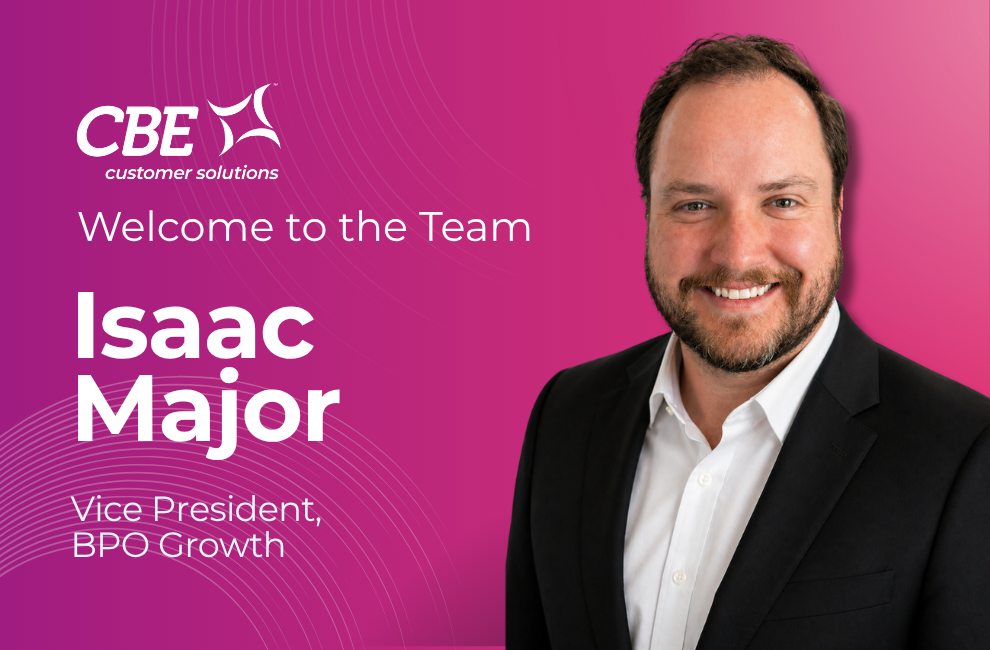
May 2026 – CBE Customer Solutions is pleased to announce the arrival of Isaac Major as the new Vice President of BPO Growth. In this role, Isaac will lead strategic sales efforts, expand enterprise partnerships, and drive growth across CBE Customer Solutions’ BPO portfolio.
Isaac brings more than ten years of experience as a customer experience and operations leader, helping organizations scale through smarter service delivery, data visibility and operational alignment. Working closely with logistics, financial services, and high-growth companies, he specializes in connecting operational execution with financial outcomes across both customer facing and back-office functions.
Known for crafting innovative sales strategies and managing complex deal cycles, he has a proven track record of spearheading U.S. market expansions, managing multimillion-dollar pipelines, and delivering double-digit revenue growth for organizations ranging from startups to global enterprises.
“Isaac brings the kind of drive, relationship focus, and industry expertise that makes an immediate impact in sales leadership,” said Erica Parks, President and CEO of CBE Customer Solutions. “He understands how to build trust with clients, identify opportunities, and create solutions that deliver real results. His energy, strategic mindset, and commitment to execution make him a strong addition to our team, and we are excited to have him at CBE.”
Major shared his thoughts on CBE’s mission and future: “What stood out to me about CBE is how it pairs long-standing stability with a genuine commitment to customer care. Even in my first few days, it was clear the company takes a proactive approach to supporting clients’ customers—prioritizing long-term outcomes over short-term cost cutting. That combination of experience, culture, and forward thinking positions CBE well for continued growth as a trusted partner in highly regulated industries.”
Isaac’s appointment reflects CBE Customer Solutions’ continued investment in experienced leadership as the company expands its BPO capabilities and deepens relationships with enterprise clients across industries.
About CBE Customer Solutions
CBE Customer Solutions is a premiere provider of customer experience and business process outsourcing services, delivering tailored CX strategies, agent development programs, and technology-forward solutions for clients across a range of industries. A subsidiary of CBE Companies, CBE Customer Solutions is headquartered in Cedar Falls, Iowa. Learn more at https://cbecustomersolutions.com/
by Jordan Mulford | Apr 28, 2026 | Press Release
FOR IMMEDIATE RELEASE
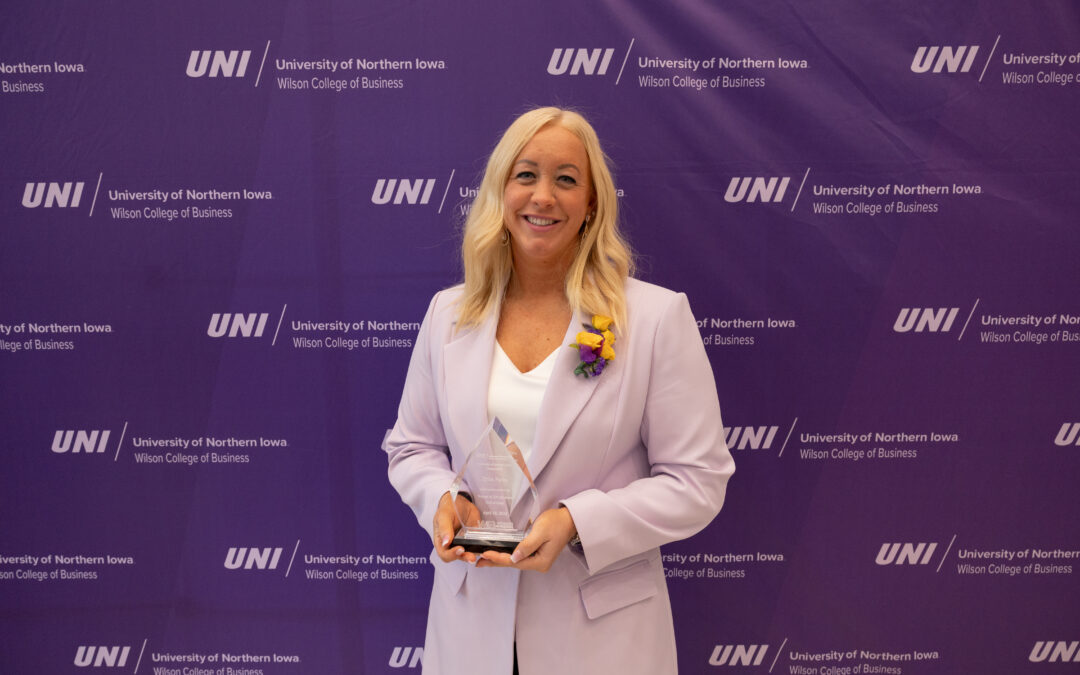
Cedar Falls, IA – CBE Customer Solutions is proud to announce that Erica Parks, President and Chief Executive Officer, has been inducted into the University of Northern Iowa (UNI) Women Business Hall of Fame. The honor recognizes distinguished UNI alumni who have demonstrated exceptional leadership, professional achievement, and a lasting commitment to empowering others in business.
Parks earned her Bachelor of Arts in Accounting with a minor in Finance from UNI in 2010 before completing a fifth year to obtain her CPA certification. She later added an Executive MBA from the University of Iowa in 2019.
At CBE Customer Solutions, Parks has built a distinguished career spanning multiple disciplines and levels of leadership. Rising from Controller to Chief Financial Officer and ultimately President and CEO, she has guided the organization through sustained growth while reinforcing the company’s commitment to compliance, integrity, and exceptional client outcomes.
“Erica’s induction into the UNI Women of Business Hall of Fame is a moment worth celebrating and frankly, one that comes as no surprise to anyone who has had the privilege of working alongside her. She leads with heart, integrity, and an unwavering belief in the potential of the people around her. Her journey from UNI graduate to CEO is a testament to what excellence and authenticity can achieve, and her impact on this organization and the people in it is far from finished. CBE Customer Solutions is incredibly proud to celebrate this recognition alongside her,” said Dr. Albert Smothers, Chief People Officer at CBE Customer Solutions.
Beyond her executive responsibilities, Parks remains deeply committed to mentoring the next generation of business leaders, advancing opportunities for women in the workplace, and leading with authenticity. Her recognition reflects these values and her ongoing dedication to lifting others as she rises.
CBE Customer Solutions is honored to celebrate this achievement alongside Erica and congratulates all inductees recognized by the UNI Women Business Hall of Fame.
About CBE Customer Solutions
CBE Customer Solutions is a leading provider of contact center and customer experience solutions, committed to delivering compliant, people-first service on behalf of its clients. As a subsidiary of CBE Companies, CBE Customer Solutions combines decades of industry expertise with a culture rooted in integrity, innovation, and exceptional outcomes.

by Jordan Mulford | Nov 13, 2025 | Blog, Telecommunications
Telecom providers know the story all too well: one outage, new product launch, or billing cycle can send call volumes soaring overnight. Customers want answers now, not later – and when they can’t get through, frustration builds fast. Each missed call isn’t just a lost opportunity; it’s a hit to brand trust.
At CBE Customer Solutions, we help telecom providers prepare before the surge hits. Because your customers don’t measure success by what happens when things go right, they measure it by how you respond when things go wrong.
Turning Spikes into Seamless Support
Managing fluctuating demand requires more than extra headcount; it requires a partner that understands the rhythms of your business and can scale in sync with them. CBE’s telecom programs are built for responsiveness, resilience, and reliability. We combine advanced forecasting, flexible staffing models, and real-time analytics to make sure customers never feel the surge.
Here’s how we do it:
- Scalable Staffing: Quickly ramp up trained agents who understand telecom customers, policies, and tone.
- Omnichannel Coverage: Meet customers where they are – phone, chat, email, or SMS – for consistent coverage.
- Smart Routing and Forecasting: Predict spikes before they happen, route calls intelligently, and keep wait times low.
- Compliance-First Operations: Every interaction is protected by strict data security, QA oversight, and regulatory alignment.
The result? Faster resolutions, lower abandon rates, and a customer experience that stays reliable, even during high call traffic.
Culture Aligned Teams That Feel In-House
Your customers should never feel like they’ve been handed off to an outsourced provider. That’s why CBE integrates deeply with each telecom partner’s brand, tone, and values from day one. Every agent is trained to sound and service like part of your internal program. Our supervisors and QA teams stay closely connected to ensure conversations reflect your standards and meet customer expectations every time.
Technology That Keeps Conversations Flowing
Modern telecom support requires more than manpower. Our integrated technology stack enhances visibility, reduces manual effort, and improves both customer and agent experience.
- AI-Enabled Monitoring: Detects patterns in real time to adjust staffing and support channels.
- Analytics That Drive Decisions: Turn customer feedback and performance metrics into actionable improvements.
- Secure Infrastructure: Every tool, from call recording to ticketing, meets or exceeds industry compliance standards.
With CBE Customer Solutions, technology empowers people rather than replacing them, so support remains personal, precise, and fast.
Partnering for What’s Next
Call surges always happen. The difference lies in whether they become bottlenecks or opportunities to prove reliability.
CBE Customer Solutions helps telecom providers stay one step ahead with proactive planning, scalable operations, and culture aligned customer care. When the next spike hits, your customers won’t remember the wait, they’ll remember how quickly and confidently you responded.
Ready to handle your next call surge with confidence? Let’s build telecom support that keeps customers connected, no matter how high the volume.
Learn More
